Can You Boil Water in the Microwave? Safety Tips for Advisories
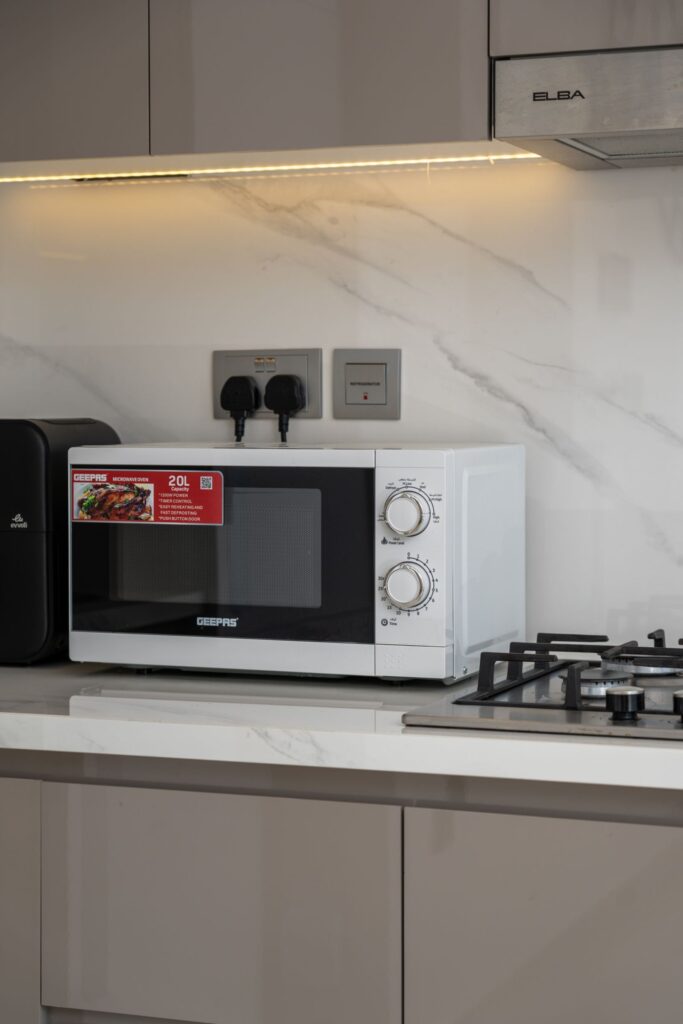
During a boil water advisory, the microwave can look like the fastest way to get a safe glass of water. You can boil water in a microwave, and it will kill germs if it reaches a full boil and stays hot long enough. But microwaves also create a specific hazard that stoves and kettles rarely do: superheated water that can erupt suddenly and cause serious burns.
This guide covers whether microwaving water is effective, why superheating happens, and a safe step-by-step method if the microwave is your best option.
Does microwaving water kill germs?
Yes, if the water actually reaches a rolling boil and is held there. The germs that cause waterborne illness are killed by heat, not by the type of appliance. The U.S. Centers for Disease Control and Prevention (CDC) guidance applies regardless of how you heat it: bring water to a rolling boil for one minute, or three minutes above 6,500 feet.
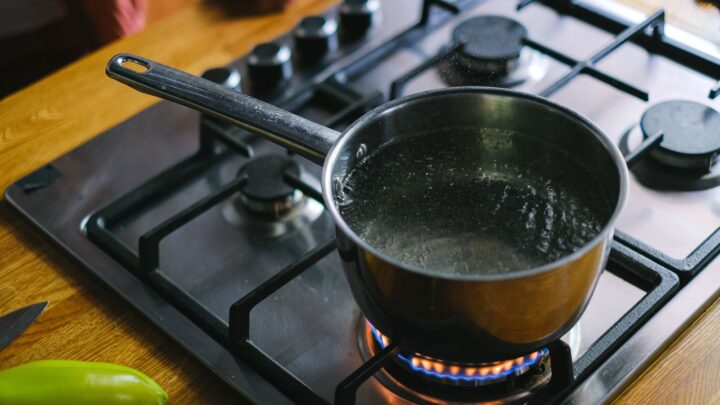
The challenge is that microwaves heat unevenly and it is harder to see and maintain a true rolling boil in a mug than in a pot. That is why the stove or an electric kettle is usually the better choice. See how to boil water safely for the standard method.

What is superheated water?
Normally, water boils when bubbles of vapor form at tiny scratches, specks or dissolved air in the container. These spots are called nucleation sites. In a very smooth, clean cup heated in a microwave, there may be too few nucleation sites. The water can rise above its boiling point without bubbling.
That superheated water looks calm. The danger comes when it is disturbed: when you move the cup, drop in a spoon, add a tea bag, or pour in powder. Vapor forms all at once and the water can explode out of the cup. The U.S. Food and Drug Administration has warned about burns caused by superheated water from microwaves.
Signs you might have superheated water
- The water has been heated well past the time it normally takes to boil, but shows few or no bubbles.
- The container is very smooth, new, or made of glass.
- You heated plain water that had already been boiled once (it contains less dissolved air).
How to boil water in the microwave safely
Step 1: Use a microwave-safe container
Choose a glass or ceramic container labeled microwave-safe. Avoid metal and avoid plastic that is not rated for boiling liquids. Use a container larger than the amount of water so there is room for bubbling.
Step 2: Add something non-metallic to the water
Place a microwave-safe object in the water, such as a wooden chopstick, a wooden coffee stirrer, or a microwave-safe ceramic spoon. It provides surfaces for bubbles to form and greatly reduces the risk of superheating. Never use metal.
Step 3: Heat in short intervals
Heat the water in intervals of about one minute, stopping to check. Most microwaves bring a single cup of water to a boil in about 1.5 to 3 minutes, depending on wattage and starting temperature.
Step 4: Confirm a rolling boil, then continue heating
Once the water reaches a vigorous boil, heat it for about one more minute so it stays at boiling temperature. Watch through the door. If the water stops bubbling, it is not boiling.
Step 5: Wait before removing
Leave the container in the microwave for a minute or two after heating stops. This lets any trapped energy release before you handle the cup.
Step 6: Remove carefully
Use an oven mitt. Keep your face and hands away from the top of the container. Move it slowly and set it down on a stable surface before adding anything.
Step 7: Cool and store
Let the water cool, then store it in a clean, covered container. Label it as boiled water.
When to avoid the microwave
- Large volumes. Microwaves are inefficient for more than a cup or two. Use a pot or kettle instead.
- Baby formula. Microwaves create hot spots and can scald infants. Boil water on the stove or in a kettle, and never microwave a prepared bottle. See baby formula during a boil water advisory.
- Children heating water alone. The burn risk is higher with microwaved water. Supervise kids.
- High altitude. Above 6,500 feet you need three minutes at a rolling boil, which is harder to maintain in a microwave.
Microwave vs. stove vs. kettle
| Method | Best for | Downsides |
|---|---|---|
| Electric kettle | 1 to 2 quarts quickly | Auto shut-off may stop at first boil; run it twice |
| Stove pot | Large batches, families | Slower; needs attention |
| Microwave | A single cup | Uneven heating, superheating risk, small volumes |
| Camp stove (outdoors only) | Power outages | Never use indoors due to carbon monoxide |
For most households, boiling a large pot once or twice a day and refrigerating the water is the most efficient approach. Our how long to boil water guide covers timing for each method.
Do not use these instead of boiling
- Coffee makers: they heat water to about 195 to 205°F briefly, but not to a sustained rolling boil, and the internal tubing can harbor contaminated water.
- Instant hot water taps: these usually run about 190°F and do not boil.
- Hot tap water: water heaters run well below boiling.
See coffee makers, ice makers and fridge dispensers for more on appliances.
How long does it take to boil water in a microwave?
Microwave times vary widely with wattage, the amount of water and its starting temperature. As a rough guide for one cup (8 ounces) of cold tap water:
| Microwave power | Approximate time to boil |
|---|---|
| 700 watts | 3 to 4 minutes |
| 1,000 watts | 2 to 3 minutes |
| 1,200 watts | 1.5 to 2.5 minutes |
Two cups take nearly twice as long. Because times vary, always watch for a real rolling boil rather than relying on a set number of minutes, and remember that you still need to keep the water at a boil for about one more minute.
Planning ahead: a microwave routine for small households
If you live alone or only need a few cups of safe water at a time, a microwave routine can work well:
- Keep two or three microwave-safe glass measuring cups for water only.
- Keep a wooden chopstick or stirrer next to the microwave as a reminder.
- Boil a cup at a time, let it rest in the microwave, then pour it into a labeled covered pitcher in the fridge.
- Repeat until the pitcher is full, so you are not boiling water every time you want a drink.
For anything more than a few cups a day, a pot or kettle is faster and safer.
If you get burned
Cool the burn immediately under cool (not ice-cold) running water for about 20 minutes. During an advisory, it is fine to use tap water to cool a burn on the skin. Cover it loosely with a clean dressing. Seek medical care for burns that are large, deep, on the face, hands or genitals, or on a young child.

Summary
Microwaving water is an acceptable way to kill germs during a boil water advisory, as long as the water reaches and stays at a rolling boil. Use a microwave-safe container, put a wooden stirrer in the water, heat in short intervals, wait before removing it, and handle it carefully. For larger amounts or for baby formula, use a pot or kettle instead.
To see whether your area is still under an advisory, check the boil water advisory map.