How Long Does It Take Water to Boil? Kettle, Stove and Microwave Times
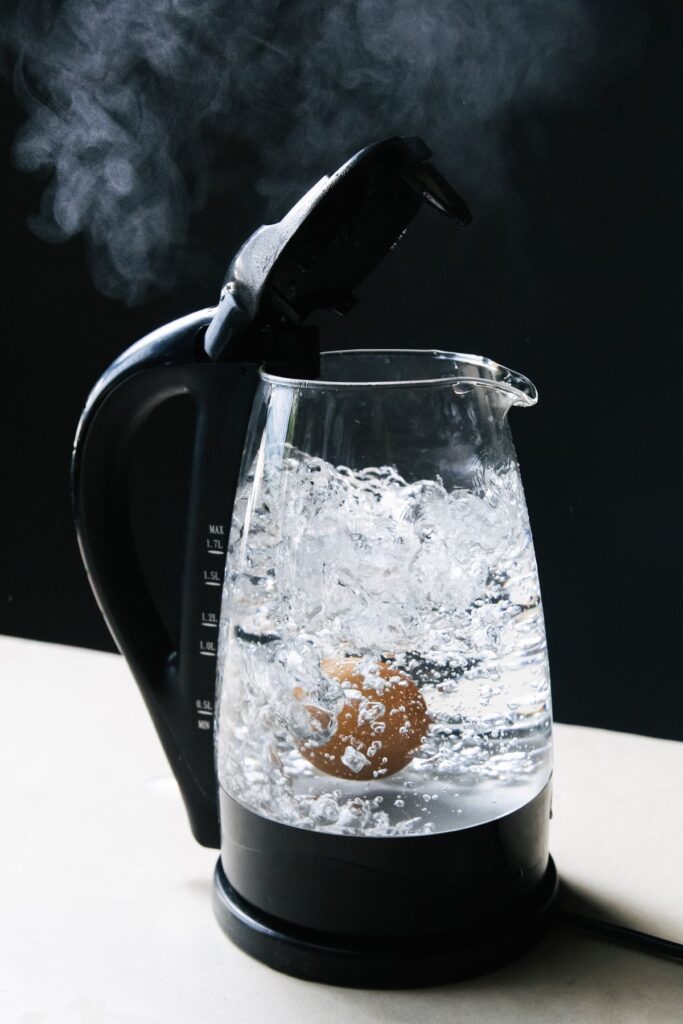
When you are under a boil water advisory, you may be boiling water several times a day. Knowing how long it takes to bring water to a boil helps you plan: how much to start in the morning, whether the kettle or the stove is faster, and how long you will wait before you can make a baby bottle or a cup of coffee.
The short answer is that a full electric kettle typically boils in about 3 to 5 minutes, a quart of water on a stovetop takes roughly 6 to 10 minutes, and a large pot can take 15 to 20 minutes or more. Below we explain the factors that change those numbers and how to boil water faster and more safely.
Typical boiling times
These are realistic ranges for cold tap water (about 50 to 60°F) at or near sea level:
| Amount and method | Approximate time to boil |
|---|---|
| 1 cup in a 1,000-watt microwave | 2 to 3 minutes |
| 1 quart (1 liter) in a 1,500-watt electric kettle | 3 to 5 minutes |
| 1.7 liters in a full electric kettle | 4 to 6 minutes |
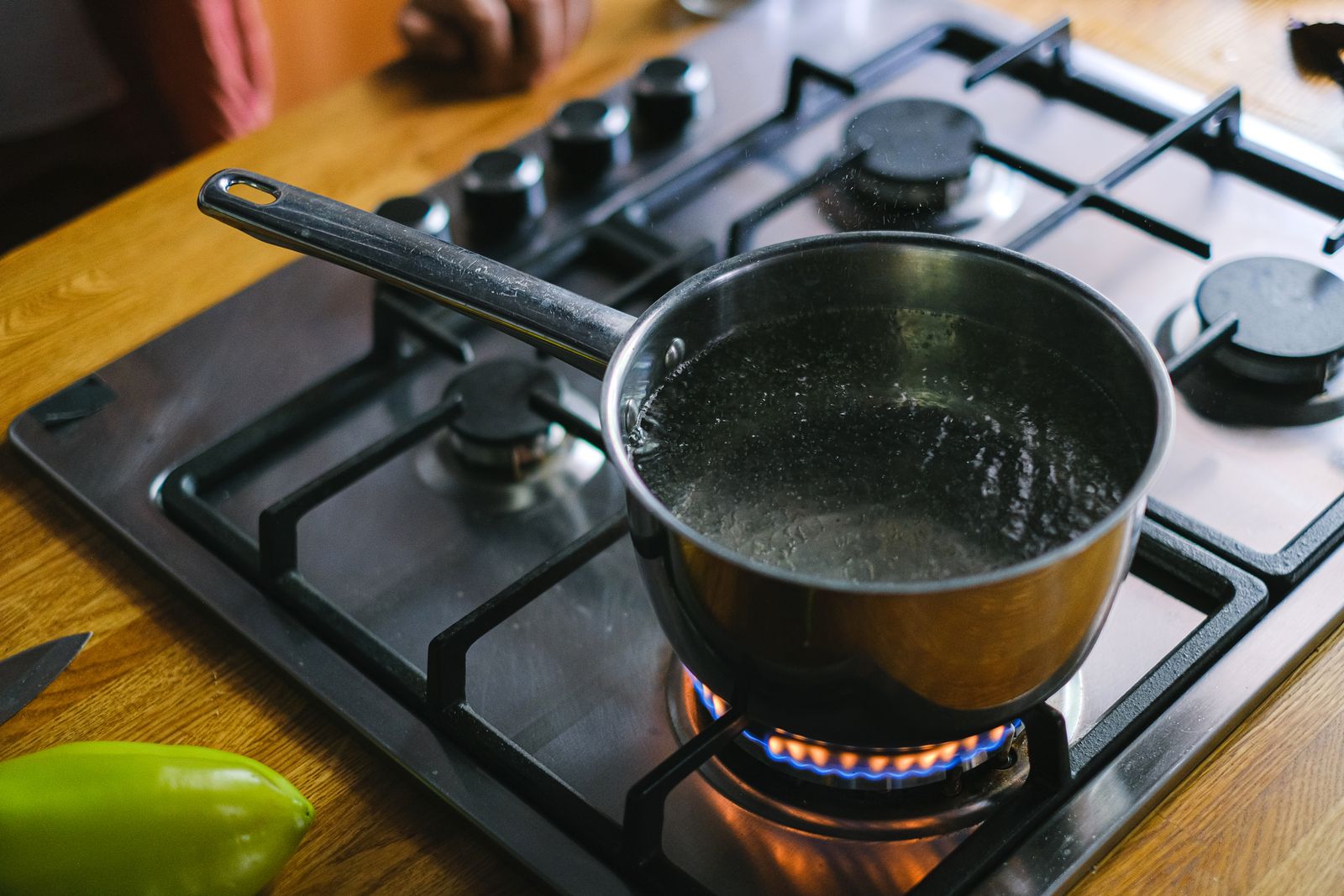
| 1 quart in a covered pot on a gas burner | 6 to 8 minutes |
| 1 quart in a covered pot on an electric coil | 8 to 10 minutes |
| 1 quart on an induction cooktop | 3 to 5 minutes |
| 1 gallon (about 4 liters) in a covered pot | 12 to 20 minutes |
| A full stockpot for pasta or canning | 20 to 30 minutes or more |
Remember that the boil itself is only part of the job during an advisory. Once the water reaches a rolling boil, keep it boiling for one minute, or three minutes above 6,500 feet. See how long to boil water for the safety rule.
The physics in plain English
Heating water takes a predictable amount of energy. It takes about 4.18 kilojoules to raise one liter of water by one degree Celsius. Bringing a liter of water from 20°C (68°F) to 100°C (212°F) therefore needs about 335 kilojoules.
A 1,500-watt kettle delivers 1.5 kilojoules every second. If every bit of that energy went into the water, the liter would boil in about 220 seconds, or just under four minutes. Real kettles are quite efficient, which is why their times are close to this estimate. Stovetops lose much more heat to the air around the pot, which is why they are slower.
What changes the boiling time
1. The amount of water
Double the water and you roughly double the time. Boiling only what you need for the next few hours, plus a reserve, saves time. During an advisory, many families find it efficient to boil one large batch twice a day and refrigerate it.
2. The heat source
Electric kettles and induction cooktops transfer heat to water efficiently. Gas burners are fast but lose heat around the sides of the pot. Electric coil and smooth-top ranges are usually the slowest because they have to heat up themselves first.
3. Using a lid
A lid keeps heat and steam in the pot. Covering a pot can shorten the time to boil by several minutes and reduces the energy you use.
4. Pot size and shape
A wide pot that matches the burner size heats faster than a narrow pot on a large burner, because less heat escapes up the sides. Thin pots heat faster than heavy cast iron, which first has to absorb heat itself.
5. Starting temperature
Tap water in winter can be 40°F or colder, while in summer it may be 70°F or more. Colder water takes longer. Do not start with hot tap water to save time during an advisory; water heater tanks can hold contaminated water and may contain more sediment and metals.
6. Altitude
At higher elevations water boils at a lower temperature, so it actually reaches a boil a bit sooner. But because it is boiling at a lower temperature, you need to boil it longer to make it safe. Our guide to the boiling point at different elevations explains the trade-off.
How to boil water faster
- Use an electric kettle for up to about two quarts at a time.
- Cover the pot with a lid.
- Match the pot to the burner. Use the largest burner with a pot whose base covers it.
- Boil only what you need, plus a reserve for the next few hours.
- Split large amounts. Two pots on two burners can be faster than one giant stockpot.
- Keep the kettle clean. Mineral scale insulates the heating element and slows heating.
Does salt make water boil faster?
No. Adding salt actually raises the boiling point very slightly, which would make boiling take a fraction longer. The amount used in cooking makes no practical difference either way. Salt is added for flavor, not speed.
Why does a watched pot seem to never boil?
The old saying has some truth. Water heats steadily, but almost nothing visible happens for most of that time. Small bubbles appear on the bottom of the pot when dissolved air comes out of solution, well before boiling. Then you see small vapor bubbles that collapse before reaching the surface, often with a hissing sound. Only at the end do large bubbles break the surface in a rolling boil. Because the visible changes are bunched up at the end, waiting feels longer than it is. Read more in why water boils.
Planning your day during a boil water advisory
Here is a simple routine for a family of four, assuming each person uses about a gallon of safe water a day for drinking, cooking and brushing teeth:
- Morning: boil one large covered pot (about 2 gallons). This may take 20 to 30 minutes on a stove.
- While it cools: use bottled water or a kettle for coffee, tea and formula.
- Midday: move cooled water into clean, labeled pitchers in the fridge.
- Evening: boil a second large pot for the next morning.
If that sounds like a lot, a case or two of bottled water can reduce how much you need to boil.
Boiling water during a power outage
Advisories often happen at the same time as power outages, especially after storms. Options include:
- A gas stove, if your burners can be lit safely with a match
- A camp stove or propane burner used outdoors only
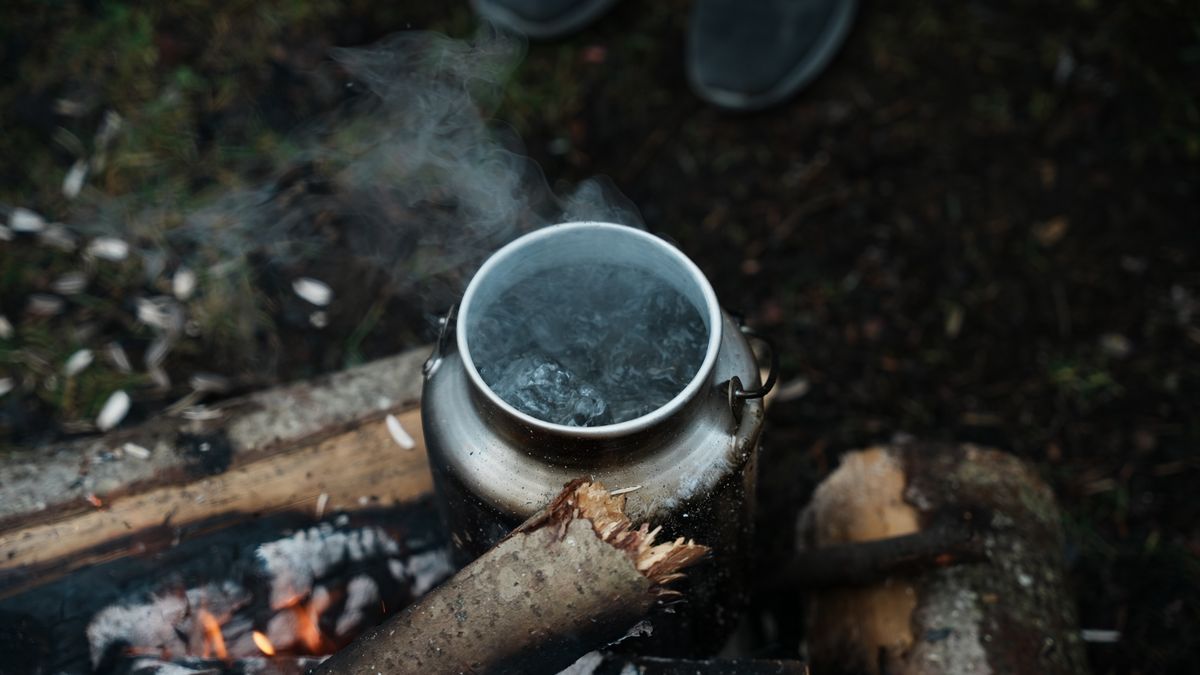
- A charcoal or gas grill used outdoors only, with a pot placed directly on the grate
Never run a camp stove, grill or generator indoors or in a garage. Carbon monoxide can kill without warning. If you cannot boil water safely, use bottled water or disinfect clear water with bleach.
Energy use and cost
Boiling water is cheap. Bringing a liter of water to a boil uses roughly 0.1 kilowatt-hours of electricity in a kettle. At typical U.S. electricity prices, that is about one or two cents. A stovetop uses more energy for the same result because of heat loss, but even boiling several gallons a day during an advisory usually costs well under a dollar.
Frequently asked questions
Is an electric kettle faster than a stove?
Usually yes for amounts up to about two quarts. Induction cooktops can match or beat kettles. Gas and electric coil burners are generally slower.
How do I know when water is actually boiling?
Look for a rolling boil: large bubbles constantly rising and breaking the surface, and bubbling that continues when you stir. Small bubbles and steam alone are not enough.
Can I start timing as soon as the kettle clicks off?
Many kettles switch off right at the first boil. For safety during an advisory, switch it back on so the water boils again briefly, or let it run through a second cycle.
The bottom line
Expect about 3 to 5 minutes for a kettle, 6 to 10 minutes for a quart on the stove and 15 minutes or more for a gallon. Use a lid, match your pot to the burner, and boil in batches to save time. When the water reaches a rolling boil, keep it there for one minute (three above 6,500 feet), then let it cool. To see whether the advisory in your area has been lifted, check the boil water advisory map.